

Why Onboarding Is a Strategic Priority
The first 90 days of a new hire are critical in determining their engagement and long-term performance. According to Gallup, companies with strong employee onboarding processes, engagement levels go up to 70% higher. SHRM data also shows that organizations improving their employee onboarding process achieve up to a 50% increase in retention.
In 2025, the war for talent, work-life balance, and employee engagement remain among the most important business priorities. Especially in hybrid and remote work models, integrating new employees into company culture has become even more critical. Designing this process in the right and healthy way creates significant value for both managers and teams. During onboarding, managing the process through regular feedback is essential for helping new hires adapt to their roles and work environment.
5 Key Steps of the Employee Onboarding Process
First Impressions
The first perception employees form about a company is crucial for employer branding. Deloitte reports that 83% of employees who experience a positive first day remain loyal to the company in the long term.
Clarifying Roles and Expectations
Clear responsibilities and success criteria boost both motivation and performance.
Introducing the Team and Culture
Even in hybrid work models, building early connections with colleagues can shorten the adaptation period by 30% (McKinsey, 2024).
Access to Training and Resources
Skill development is one of the most valued aspects of onboarding. According to LinkedIn Learning, employees who receive strong learning support are three times more likely to stay with their company.
Continuous Feedback and Follow-up
Feedback after the first week, first month, and first three months is essential to measure the effectiveness of the process.
With these five core steps, a strong onboarding process not only helps employees adapt quickly but also secures the company’s long-term success. Each strategically planned step strengthens employee engagement while reducing the cost of turnover, ensuring sustainable growth.
Outcomes of the Onboarding Process
A well-structured onboarding process does more than speed up adaptation; it also:
-
Increases employee performance by up to 25% within the first six months (Bersin by Deloitte).
-
Strengthens employees’ sense of belonging, reducing the risk of turnover.
-
Delivers visible improvements in team communication and efficiency from the early stages.
In contrast, weak onboarding processes often lead to early attrition. Glassdoor reports that 20% of new hires leave within the first 45 days. Such early departures can cost up to 1.5 times the employee’s annual salary. In other words, poor onboarding results in significant financial and cultural losses.
How Moodivation’s Onboarding Module Simplifies the Process
Moodivation addresses these trends with its Onboarding Module, designed to make the process seamless:
-
Automated three-phase survey flow (first week, first month, third month)
-
Evaluation of buddy and manager support
-
Ready-to-use and customizable question sets
-
Automated PDF & Excel reporting
-
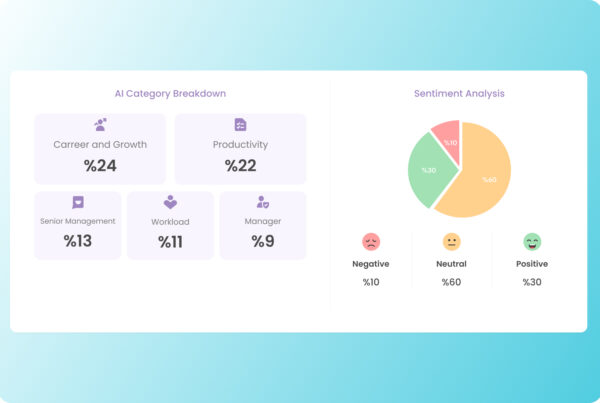
AI-powered analysis to categorize open-ended feedback thematically
With Moodivation, organizations can closely track new employees’ experiences, detect issues early, and strengthen engagement.
Conclusion
A successful onboarding process determines not only the employee’s success but also the company’s long-term performance. In 2025, the most powerful way to attract and retain talent is to give new employees a strong start. With Moodivation’s AI-powered infrastructure, this process becomes measurable, data-driven, and continuously improvable.
Discover the Moodivation Onboarding Module to enhance the new hire experience and reduce the costs of early attrition.



 Linkedin


