

In recent years, the business world has been dominated by the concept of “quiet quitting.” Now, especially in white-collar landscape, a new term is emerging: quiet cracking. Discussed widely across both global and local HR platforms, this isn’t a passing trend — it represents the new face of the employee engagement crisis.
At Moodivation, we observe the same pattern across Türkiye and global research: employees are still present — at their desks, in meetings, in front of their screens — yet mentally and emotionally, they have already begun drifting away from their organizations.
Türkiye’s Reality: Employees Who Are Physically Present but Mentally Gone
According to Gallup’s 2024 State of the Global Workplace report, the situation in Türkiye is far from encouraging:
•Employee engagement stands at only 14–15%.
•61% of employees are “disengaged,” and 25% are “actively disengaged.”
•One out of every two employees is actively looking for a new job.
What does this mean?
A large portion of the workforce is already detaching silently — dissolving from the inside without any loud signs of resignation. That’s why many Türkiye-based HR articles describe quiet cracking as this exact phenomenon: being physically at work but emotionally elsewhere.
Quiet Cracking vs. Quiet Quitting
The distinction commonly made in Türkiye’s HR discussions is:
Quiet Quitting
•A conscious decision not to go beyond one’s job description.
•Doing the minimum required — no more, no less.
•A form of boundary-setting.
Quiet Cracking
•Work continues; there isn’t even a clear decision to leave.
•But emotional and cognitive breakdown has already begun.
•Employees lose the meaning of their work, their connection to it, and their hope for the future.
•The separation is often unconscious, driven by deep, persistent exhaustion.
In VICE and PeopleMatters articles, quiet cracking is described as “burnout without the explosion,” or “a hairline fracture — invisible but continuously spreading.”
Türkiye-based publications echo this with labels such as “the new crisis of white-collars,” “the invisible collapse,” and “the silent face of the Great Break.”
Typical Signs of Quiet Cracking
Both global studies and Moodivation’s own data show consistent indicators:
•Noticeable silence in meetings — first cameras off, then voices off
•Slower responses in Slack/Teams/email, increasingly short replies
•Loss of emotional connection with goals and OKRs
•Reduced participation in voluntary initiatives
•Declining motivation for training, development, or new projects
•Survey comments expressing “nothing will change” or “no one is listening”
According to TalentLMS’s global research, more than half of employees feel close to quiet cracking; 29% say they cannot handle their workload, and 15% say they don’t fully understand their role.
This makes one thing clear: quiet cracking is not just fatigue — it is a breakdown triggered by loss of meaning, role ambiguity, and lack of psychological safety.
What Türkiye’s Quiet Quitting Research Shows
While quiet cracking is only now entering the academic literature in Türkiye, there are numerous studies on quiet quitting — and they reveal clear trends:
•As quiet quitting increases, job satisfaction and organizational commitment decrease.
•Lower person–organization fit increases the likelihood of quiet quitting.
•As burnout rises, employees prefer staying physically but withdrawing internally rather than actively resigning.
This directly explains quiet cracking:
People cannot leave their jobs due to economic pressures, unemployment concerns, or financial responsibilities — so they stay, but emotionally collapse. Many global articles highlight this same profile: employees who are too exhausted to leave, yet too disengaged to function.
Leadership Implication: This Is Not a Performance Issue — It’s a Culture Issue
Across recent publications, one insight is consistent: quiet cracking is not about individual performance — it is about culture and leadership.
Especially in Türkiye:
•Middle managers carry both top-down pressure and the team’s workload.
•Without support for emotional intelligence, coaching, and active listening, quiet cracking starts with managers and spreads throughout the team.
This is why Moodivation doesn’t design dashboards as “HR-only screens.”
Instead, our manager dashboards provide:
•Team-level engagement and burnout risk
•Insights into trust, recognition, development, and work-life balance
•Themes extracted from anonymous comments
The goal: not performance reporting, but a leadership early-warning system.
Moodivation’s Perspective: Four Critical Areas to Detect Quiet Cracking
1. Continuous Pulse Measurement — Annual Surveys Are Not Enough
An annual engagement survey is far too slow to catch quiet cracking.
With Moodivation, organizations combine:
•Annual engagement studies
•Mid-year pulse surveys
•Rapid checks during transitions (restructuring, manager changes, etc.)
This reveals trends months before scores “suddenly” drop.
2. Reading Onboarding and Exit Data Together
Quiet cracking often starts with a bad beginning or bad ending.
•High expectation–reality gaps in onboarding
•Negative themes around fairness, growth, and leadership in exit surveys
These patterns often predict near-future drops in engagement.
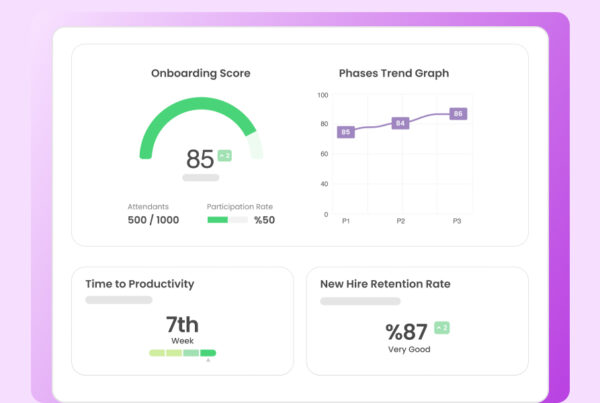
Moodivation’s Onboarding and Exit Modules make these patterns visible.
3. Anonymous Feedback & Psychological Safety
A common theme in Türkiye’s quiet cracking discussions:
“Employees don’t feel safe speaking up — and even when they do, nothing changes.”
Moodivation’s Anonymous Feedback Module provides:
•A safe channel for reporting issues like burnout, misconduct, unfairness
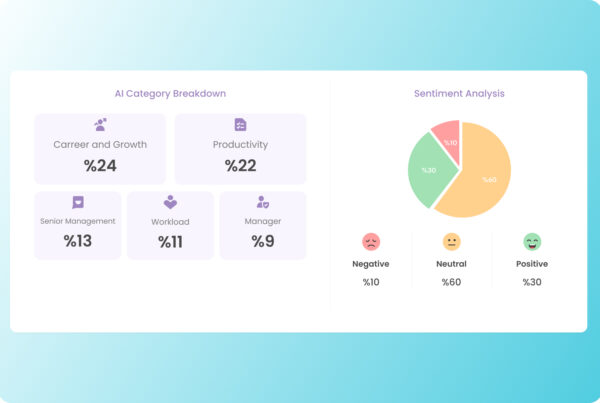
•AI-powered categorization showing where silent accumulations exist
This enables organizations to track quiet cracking through real employee voice.
4. Making Action Plans Visible
Research on quiet quitting consistently shows:
The belief that “nothing will change” accelerates disengagement.
Moodivation addresses this by providing:
•Team-specific action suggestions
•Simple, practical improvement plans
•Trend tracking to show progress over time
Building trust in the employee experience requires not only measurement — but showing that measurement leads to action.
The Kintsugi Perspective: Seeing the Crack Is More Valuable Than Hiding It
Quiet cracking is an uncomfortable mirror for organizations. But denying it doesn’t fix it — it only hides it.
The Japanese philosophy of Kintsugi repairs broken ceramics with gold, highlighting the cracks instead of hiding them. We can bring the same approach to organizational culture:
•Turn cracks into data
•Strengthen psychological safety
•Elevate leaders from “target trackers” to “human experience leaders”
Moodivation’s mission sits exactly here:
Transforming cracks into numbers, comments into insights, and emotions into action plans.
With early detection, quiet cracking becomes not a threat but a catalyst — an opportunity to build stronger, more human-centered organizational cultures.


 Linkedin


